
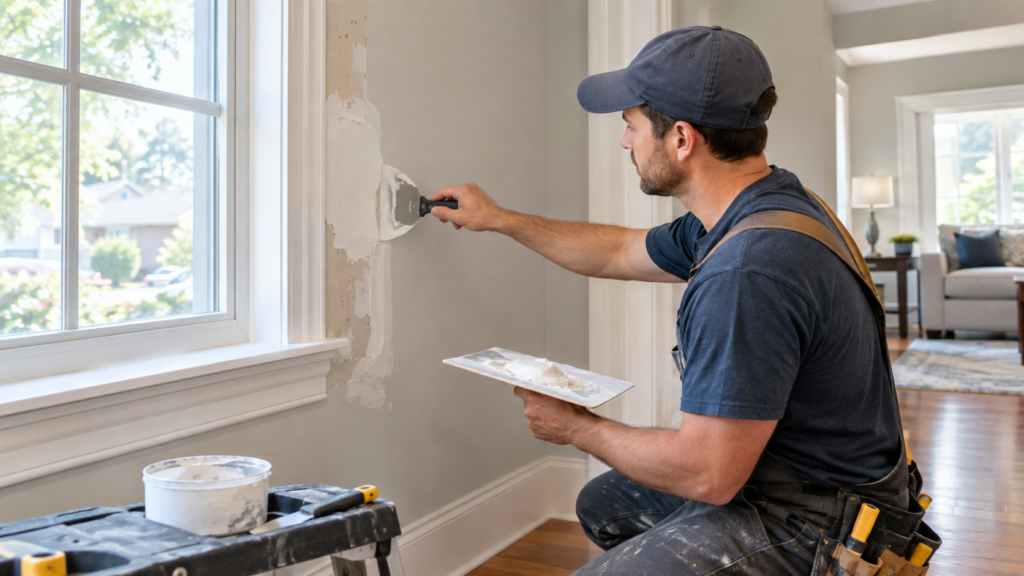
How to Repair Drywall Around Doors and Windows in Alpharetta
Doors and windows are common areas for drywall damage. Repeated movement, settling, moisture, accidental impacts, and changes around frames can cause cracks, dents, loose drywall, or damaged corners. Because these areas meet other building components, repairs need a little more attention than filling an ordinary wall hole.
If you are wondering How to Repair Drywall Around Doors and Windows in Alpharetta, the first step is to identify what caused the damage. A small surface crack may need only joint compound and finishing, while recurring cracks or moisture-related damage may require a closer inspection.
Why Does Drywall Around Doors and Windows Get Damaged?
Drywall around openings can experience movement and stress over time. Some common causes include:
- Normal movement or settling of the home
- Repeated opening and closing of doors
- Impact from furniture or household items
- Poorly finished drywall joints
- Loose or damaged corner bead
- Changes made during door or window replacement
- Water intrusion around windows
- Plumbing or moisture problems nearby
- Poorly finished previous repairs
Understanding the cause matters because simply covering a crack or damaged area may not prevent the problem from returning.
Step-by-Step Drywall Repair for Doors and Windows
The appropriate repair method depends on the type and extent of damage. A typical repair involves several steps.
1. Inspect the Damaged Area
Begin by examining the drywall around the door or window frame. Look for cracks, dents, loose sections, peeling paper, discoloration, or soft areas.
Pay particular attention to water stains around windows. If moisture is entering through the exterior, fix the source before repairing the interior drywall.
2. Remove Loose or Damaged Material
Carefully remove loose drywall paper, crumbling compound, and unstable pieces. A damaged surface cannot provide a reliable base for new joint compound.
For minor surface damage, only the affected material may need to be removed. More extensive damage may require cutting back to a stable section of drywall.
3. Check the Joint or Corner
Doors and windows often have drywall joints close to the frame. If the joint tape has separated or cracked, the damaged tape may need to be removed and replaced.
Corners can also develop damage when the corner bead becomes loose or bent. In these situations, simply applying another layer of compound may not provide a lasting repair.
4. Apply Joint Compound or a Patch
Small cracks and shallow dents can generally be filled with an appropriate joint compound. Larger damaged areas may require drywall patches.
The compound should be applied in thin, even coats. Applying several thin coats generally provides better control than trying to fill the entire damaged area with one thick application.
5. Feather the Edges
One of the most important parts of drywall finishing is blending the repair into the surrounding wall.
The compound should extend beyond the damaged area, with the edges gradually feathered outward. This reduces the chance of seeing a raised patch after the wall has been painted.
6. Sand and Inspect
Once the compound has dried, lightly sand the surface until it is smooth. Avoid excessive sanding, particularly around drywall paper and finished trim.
Use good lighting to inspect the area from different angles. Small ridges or depressions that are difficult to notice before painting can become much more visible once the wall is finished.
7. Prime and Paint
The repaired surface should be properly prepared before painting. Primer can help create a consistent surface between the repaired area and the surrounding drywall.
The final paint should match the existing wall in both color and sheen. If the surrounding paint has aged or faded, painting a larger section may produce a more uniform appearance.
Common Problems Around Doors and Windows
Different types of damage require different solutions. The table below summarizes some common situations homeowners may encounter.
| Problem | Possible Cause | Typical Repair Consideration |
|---|---|---|
| Hairline crack | Normal movement or joint stress | Clean, fill, and refinish the crack |
| Cracked drywall joint | Failed or damaged joint tape | Remove damaged tape and retape |
| Dented drywall | Impact or accidental damage | Patch and refinish the affected area |
| Damaged corner | Impact or loose corner bead | Repair or replace damaged corner material |
| Stained drywall | Moisture intrusion | Identify and correct moisture source before repair |
| Soft or crumbling drywall | Prolonged moisture exposure | Damaged material may need replacement |
U.S. Housing Data on Cracks, Moisture, and Repairs
Damage around doors and windows is part of a much larger national pattern of home maintenance. These figures show how common cracks, moisture, and repair work are.
| Housing Indicator | Reported Figure | Why It Matters for Drywall Around Doors and Windows |
|---|---|---|
| Homes with open cracks or holes inside (2023) | 7.2 million | Interior cracks are a common condition, which is why the cause should be identified before the wall is refinished. |
| Homes with broken plaster or peeling paint inside (2023) | 2.9 million | Surface deterioration often needs proper repair, priming, and repainting. |
| Homes reporting water leakage from outside (2023) | 11.8 million | Exterior water intrusion around windows can damage interior drywall, so the source should be fixed first. |
| Homes reporting water leakage from inside (2023) | 11.2 million | Interior leaks can stain and soften drywall and lead to recurring damage. |
| Median age of U.S. housing stock (2023) | 44 years, up from 39 in 2013 | Older homes have had more time for settling, wear, and earlier repairs around openings. |
| Owner-occupied homes built before 1980 (2024) | About 47% | Older homes may have aging finishes and previous patching that can contribute to repair needs. |
| Home improvement and repair spending | $611 billion in 2022; replacements such as roofing, windows, and HVAC made up 49% of improvement spending in 2023 | Window replacement is a major category of home work, and it can disturb the surrounding drywall. |
Source
- U.S. Census Bureau and HUD, American Housing Survey (AHS) 2023, Housing Quality: cracks, plaster and paint conditions, and water leakage.
- Harvard Joint Center for Housing Studies (JCHS), Improving America’s Housing 2025, and JCHS analysis of the 2023 AHS: median age of the housing stock and remodeling spending.
- National Association of Home Builders (NAHB), Eye on Housing (March 2026): analysis of U.S. Census Bureau American Community Survey data on the age of owner-occupied homes.
When Should You Call a Professional?
Not every crack or dent requires professional assistance. Minor cosmetic damage may be manageable with basic drywall repair materials.
Professional help becomes more useful when the damage keeps returning, covers a large area, or comes with other problems. Consider having a professional inspect the area if you notice:
- Repeated cracks around the same door or window
- Significant separation between drywall and frame
- Water stains or damp drywall
- Soft, swollen, or crumbling drywall
- Extensive damage around a replacement window
- Damaged corner bead
- Multiple areas requiring patching and repainting
Recurring cracks can sometimes indicate movement or an underlying issue rather than simply a damaged surface.
How to Prevent Future Drywall Damage
Regular inspection can help homeowners identify problems before they become extensive. Check areas around windows for signs of water intrusion, particularly after heavy rain.
Avoid placing excessive pressure on drywall near door and window openings. When installing shelves, curtain hardware, or other fixtures, use suitable anchors and installation methods for the wall.
It is also important to address plumbing or moisture problems promptly. Repairing the visible drywall without dealing with the source of moisture can result in repeated damage.
Why Choose JustFixToday for Drywall Repair in Alpharetta?
JustFixToday provides professional handyman services for homeowners in Alpharetta and surrounding Metro Atlanta communities.
Drywall repairs around doors and windows often require more than simply filling a crack. Proper preparation, patching, finishing, sanding, and surface preparation can all affect how well the repaired area blends with the rest of the wall.
JustFixToday’s licensed and insured professionals can help homeowners address drywall damage as part of individual repair projects or broader home maintenance work. The company also provides background-checked professionals and a 100% satisfaction guarantee.
Final Thoughts
Learning How to Repair Drywall Around Doors and Windows in Alpharetta starts with understanding why the damage occurred. Small dents and surface cracks may require straightforward patching, while damaged joints, corner bead problems, recurring cracks, and moisture-related issues need more careful attention.
A properly finished repair should blend with the surrounding wall rather than simply cover the visible damage. When the cause is uncertain or the affected area is extensive, professional drywall repair can help restore the wall and address problems that may otherwise return.
If you’re still unsure How to Repair Drywall Around Doors and Windows in Alpharetta, an inspection can help determine the appropriate repair approach.
Frequently Asked Questions
Why does drywall crack around doors and windows?
Drywall around openings can develop cracks because of movement, joint stress, settling, or previous finishing problems. Inspect recurring cracks rather than repeatedly covering them.
Can damaged drywall around a window be repaired?
Yes, if the damage is limited. However, if the drywall is soft, swollen, or stained because of moisture, identify and fix the source of the water before repairing the wall.
How do you repair drywall around a door frame?
We clean and stabilize the damaged area before applying joint compound or a suitable patch. We may also replace cracked tape or damaged corner material before sanding and painting.
Can I paint directly over repaired drywall?
It is generally better to prepare and prime the repaired surface before painting. This helps reduce differences in absorption and makes the finished repair less noticeable.
When should drywall around a window be replaced?
Replacement may be appropriate when the drywall is extensively deteriorated, soft, swollen, or unable to provide a stable surface for repair. First, fix any underlying moisture problems before replacing the drywall.
Need Drywall Repair Around Doors or Windows in Alpharetta?
Damaged drywall can make an otherwise well-maintained home look unfinished. Whether you’re dealing with cracks, dents, damaged joints, or moisture-related problems, proper repairs can restore the appearance of your walls.
Call JustFixToday at (678) 549-8083 to discuss your drywall repair needs in Alpharetta and schedule professional service.