
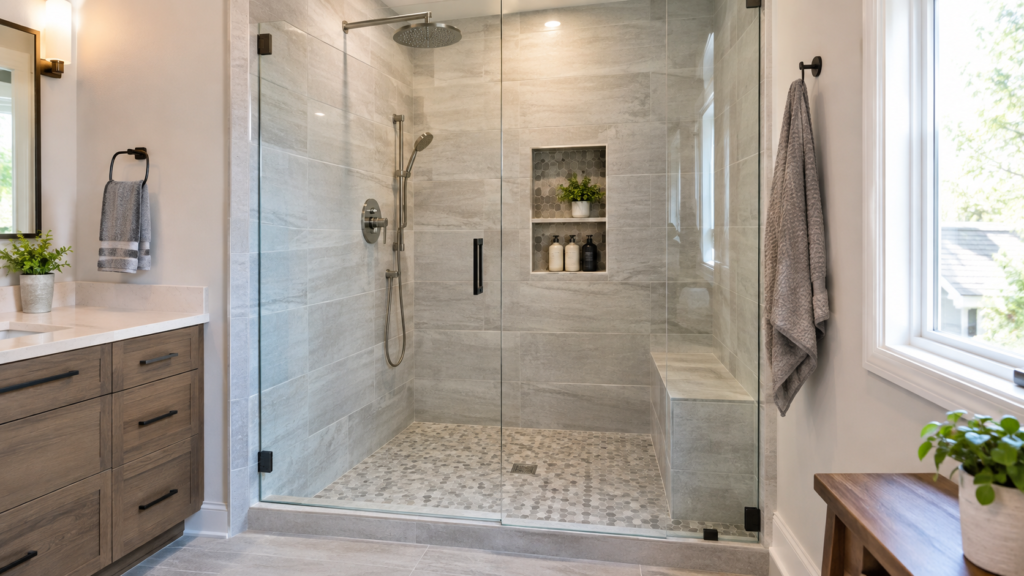
What Is the Best Material for a Walk-In Shower?
Choosing the right material is one of the most important decisions when planning a walk-in shower. The walls and floor need to handle regular moisture, cleaning, temperature changes, and daily use while also fitting the look and budget of the bathroom.
There is no single material that is best for every homeowner. Tile, acrylic, fiberglass, solid-surface panels, and natural stone all have different advantages and limitations.
So, what is the best material for a walk-in shower? The answer depends on factors such as durability, maintenance, appearance, installation requirements, and how the shower will be used.
What Materials Are Commonly Used for Walk-In Showers?
Several materials are commonly used for shower walls and floors. Each option offers a different balance between appearance, maintenance, durability, and installation complexity.
Ceramic and Porcelain Tile
Ceramic and porcelain tile are among the most popular choices for walk-in showers. They are available in many colors, patterns, textures, and sizes, making it possible to create anything from a simple traditional shower to a contemporary design.
Porcelain generally has very low water absorption, making it a practical choice for wet areas. Ceramic tile can also work well when properly installed.
The main consideration is the grout. While the tile itself can be relatively easy to maintain, grout lines require regular cleaning and appropriate maintenance.
Acrylic Shower Panels
Acrylic is another popular option, particularly for homeowners who want a simpler surface with fewer joints.
Large acrylic panels can reduce the number of seams compared with a tiled shower. This can make routine cleaning easier and give the shower a streamlined appearance.
Acrylic can also be lighter and faster to install than some tile or stone systems. However, the quality of the material and installation can affect its durability and appearance over time.
Fiberglass
Fiberglass shower systems are generally affordable and lightweight. They can be a practical choice for straightforward bathroom remodeling projects where keeping costs under control is important.
One advantage is the relatively simple surface, which does not require the same amount of grout maintenance as a tiled installation.
However, fiberglass can be more susceptible to scratching or surface damage than some higher-end materials. It may also provide fewer design options than tile or solid-surface systems.
Solid-Surface Shower Panels
Solid-surface materials can provide a smooth, modern appearance without extensive grout lines. They are available in different colors and patterns and can sometimes be made to resemble natural stone.
With fewer joints to clean, solid-surface panels can be appealing to homeowners who want a lower-maintenance shower.
The overall cost can be higher than basic fiberglass or acrylic, but the combination of appearance, durability, and easier maintenance may make them worthwhile for some remodeling projects.
Natural Stone
Natural stone such as marble, granite, or slate can create a distinctive and upscale appearance. Each piece can have its own color and pattern, giving the shower a more natural look.
However, natural stone generally requires more care than many manufactured shower surfaces. Depending on the material, sealing may be necessary to help protect the surface from moisture and staining.
Homeowners considering natural stone should also account for material weight, installation requirements, and ongoing maintenance.
Which Walk-In Shower Material Is Easiest to Maintain?
If easy maintenance is the priority, surfaces with fewer grout lines and seams can be attractive.
Acrylic, fiberglass, and solid-surface panels can reduce the amount of grout cleaning compared with a traditional tiled shower. Large-format tile can also reduce the number of grout joints compared with small tiles.
However, the material itself is only part of the maintenance equation. Proper ventilation, cleaning habits, drainage, and installation quality can all affect how well a shower performs over time.
Which Material Is the Most Durable?
Porcelain tile, quality ceramic tile, solid-surface materials, and natural stone can all provide long-lasting results when properly selected and installed.
Durability depends on more than simply choosing a strong material. The substrate, waterproofing system, installation method, grout, sealants, drainage, and routine maintenance all matter.
For example, a high-quality tile installation with inadequate waterproofing can still develop serious problems. Conversely, a properly installed manufactured shower system can provide reliable performance for many years.
What Is the Best Material for a Walk-In Shower Floor?
The shower floor deserves special attention because it is regularly exposed to water and needs to provide a stable surface underfoot.
Porcelain and ceramic tile are common choices, but the size, texture, and surface characteristics of the tile matter. Smaller tiles can also be useful for shower floors because their additional grout joints can help accommodate the slope required toward the drain.
Whatever material is selected, the shower floor should be properly sloped toward the drain and installed as part of an appropriate waterproofing system.
A smooth, highly polished surface may look attractive but may not be the best choice for a wet shower floor. A suitable textured or slip-resistant surface is generally a better option for areas exposed to regular water.
Important Factors When Choosing a Walk-In Shower Material
The material you choose affects maintenance, durability, water management, and safety. These considerations are especially important when comparing tile, acrylic, fiberglass, solid-surface panels, and natural stone.
Factor |
Important Considerations |
Why It Matters |
| Water Resistance | Shower wall and floor assemblies should use materials and waterproofing methods suitable for frequent moisture exposure. Tile and grout alone should not be treated as the complete waterproofing system. | Proper moisture protection helps prevent water from reaching the underlying wall and floor structure. |
| Shower Floor | The shower floor should be designed to drain water effectively toward the drain. Tile and other floor materials should be appropriate for wet-area use and provide a suitable walking surface. | Proper drainage helps prevent standing water, while an appropriate surface can improve footing in wet conditions. |
| Slip Resistance | Shower floors should be selected with wet-area safety in mind. For tile installations, slip-resistance characteristics should be considered when choosing the floor surface rather than relying only on appearance. | A shower floor becomes slippery when wet, so surface selection is an important safety consideration. |
| Grout & Joints | Tile installations contain grout joints that require appropriate cleaning and maintenance. Larger-format tiles or panel systems can reduce the number of joints. | Fewer joints can mean less routine grout maintenance and fewer areas where buildup can occur. |
| Installation Requirements | Different materials require different substrate preparation, adhesives or setting methods, joint treatments, and manufacturer-approved installation procedures. | Following the correct installation system helps the finished material perform as intended. |
| Accessibility | When accessibility is a priority, shower design can incorporate features such as low- or zero-threshold entry, appropriate floor surfaces, and properly planned grab-bar support. | Material selection should work with the overall shower design rather than being considered separately from accessibility. |
Source details: This guidance is based on relevant provisions and technical guidance from the U.S. Access Board, Tile Council of North America (TCNA), ANSI tile standards, and applicable ICC/IAPMO residential and plumbing codes. Product-specific installation instructions should also be followed, and local code requirements may vary by jurisdiction.
Which Walk-In Shower Material Is Best for Your Budget?
Budget is an important part of material selection, but the lowest initial price is not always the best value.
Fiberglass and basic acrylic systems can be attractive for homeowners looking for a more economical solution. Tile can provide greater design flexibility across a wide range of price points, while solid-surface and natural-stone installations may involve higher material and installation costs.
The total project cost can also depend on demolition, plumbing changes, waterproofing, shower size, drainage, wall preparation, fixtures, and labor.
If you’re comparing shower remodeling options in Alpharetta, understanding the factors behind standing shower installation cost can help you build a more realistic project budget.
How Do You Choose Between Tile and Shower Panels?
The choice often comes down to your priorities.
Choose tile if you want extensive design flexibility, different patterns and sizes, and the ability to create a highly customized appearance. Be prepared for regular grout maintenance and more involved installation.
Choose acrylic or solid-surface panels if you prefer larger continuous surfaces, fewer grout joints, and potentially simpler routine cleaning.
Neither option is automatically better for every bathroom. The condition of the existing walls, shower dimensions, drainage, waterproofing requirements, and overall design should all be considered before making a decision.
Installation complexity can also affect the overall project schedule, so understanding walk-in shower installation time can help you plan the remodeling process.
Does Waterproofing Matter More Than the Shower Material?
In many remodeling projects, proper waterproofing is just as important as the visible shower material.
Tile, stone, acrylic, and other finished surfaces do not by themselves guarantee that the wall assembly will remain protected from water. A properly designed and installed waterproofing system helps manage moisture behind the finished surface.
This is especially important around shower corners, joints, niches, penetrations, and the connection between the shower floor and walls.
A beautiful shower can still develop expensive problems if moisture gets into areas that were not properly protected.
How Can You Get the Best Results From Your Shower Material?
Start by considering how the shower will be used every day. A busy household may benefit from durable, easy-to-clean surfaces, while a homeowner focused on custom design may prefer tile or natural stone.
It is also worth considering the complete installation rather than selecting a surface material in isolation. Waterproofing, drainage, substrate preparation, grout, sealants, and fixtures all contribute to the final result.
Before construction begins, make sure the chosen material is compatible with the planned shower system and that the installation follows the manufacturer’s requirements and applicable codes.
Why Choose JustFixToday for Walk-In Shower Remodeling?
A walk-in shower is more than a collection of wall panels, tiles, and fixtures. The finished result depends on proper planning, surface preparation, waterproofing, drainage, and installation.
JustFixToday helps homeowners in Alpharetta and surrounding communities with bathroom remodeling and home improvement projects. Our team can help evaluate the existing space, discuss practical material options, and coordinate the work needed to create a functional and attractive shower.
Whether your priority is easier maintenance, a modern appearance, accessibility, or long-term durability, choosing the right materials and installation approach can make a significant difference.
Final Thoughts
So, what is the best material for a walk-in shower? There is no universal answer. Porcelain and ceramic tile offer versatility, acrylic and fiberglass can provide practical and economical solutions, solid-surface panels offer low-maintenance appeal, and natural stone can create a distinctive high-end look.
The most important step is to look beyond the visible material. Proper waterproofing, drainage, installation, and maintenance are essential to getting reliable long-term performance from any shower system.
By comparing the materials based on your bathroom, budget, maintenance preferences, and intended use, you can choose a walk-in shower that provides both practical value and the appearance you want.
Frequently Asked Questions
1. What is the most popular material for a walk-in shower?
Ceramic and porcelain tile are widely used because they offer many design options and can provide durable surfaces when properly installed. Acrylic, fiberglass, and solid-surface systems are also common alternatives.
2. Is acrylic or tile better for a walk-in shower?
It depends on your priorities. Acrylic can offer easier maintenance and fewer seams, while tile provides greater design flexibility and customization. Installation quality is important with both options.
3. What is the easiest shower material to clean?
Large-format tile, acrylic, fiberglass, and solid-surface panels can all be relatively easy to maintain. Surfaces with fewer grout joints generally require less grout cleaning.
4. What is the best tile for a walk-in shower floor?
Porcelain and ceramic tiles designed for wet-area use are common choices. The floor should have an appropriate surface and be installed with proper slope and drainage rather than selected solely for appearance.
5. How long does a walk-in shower material last?
The lifespan varies by material, product quality, installation, use, and maintenance. Proper waterproofing and installation are important factors in achieving long-term performance.
Ready to Plan Your Walk-In Shower?
If you’re considering a walk-in shower installation in Alpharetta, choosing the right material is only the first step. JustFixToday can help you evaluate your bathroom, compare practical options, and plan the remodeling work around your needs and budget.
Call +1 678-549-8083 or visit JustFixToday to discuss your bathroom remodeling project.