
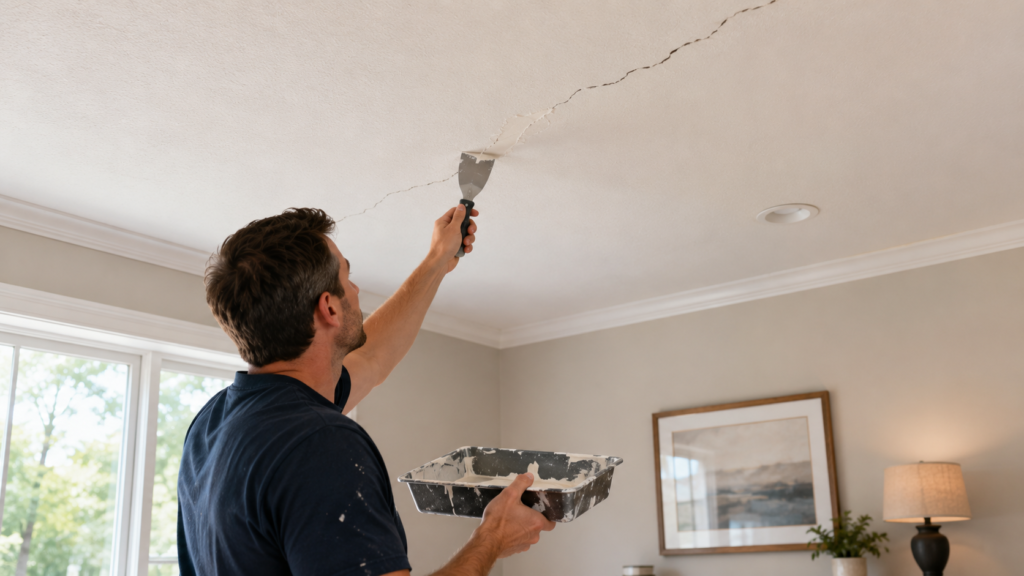
How Can I Fix Drywall Cracks in My Ceiling? A Practical Guide for Alpharetta Homeowners
Ceiling drywall cracks are common in homes, but they should not always be treated as a simple cosmetic issue. Small cracks may result from normal settling, while wider or recurring cracks can point to moisture, movement, poor installation, or other underlying problems.
If you’re asking, how can I fix drywall cracks in my ceiling, the right solution depends on the crack’s size, location, pattern, and cause. For Alpharetta homeowners, addressing the underlying problem before repairing the surface can help prevent the crack from returning.
How Can I Fix Drywall Cracks in My Ceiling?
For a minor, stable crack, the repair process usually involves cleaning the damaged area, applying drywall joint compound or appropriate tape, allowing it to dry, sanding it smooth, and repainting the ceiling.
However, how can I fix drywall cracks in my ceiling when the crack keeps coming back? In that situation, simply applying another layer of compound may only provide a temporary solution. The cause could involve movement between drywall sheets, framing movement, moisture, or another issue that needs attention first.
Before beginning a repair, inspect the surrounding ceiling for stains, sagging, loose drywall, or additional cracks.
What Causes Cracks in Ceiling Drywall?
Understanding the cause is one of the most important parts of a successful repair.
Common causes include:
-
Normal settling and minor building movement
-
Movement between drywall panels
-
Poorly finished drywall seams
-
Seasonal changes in temperature and humidity
-
Moisture or water leaks
-
Loose fasteners
-
Structural movement
-
Previous repairs that were not properly reinforced
A narrow crack along a drywall seam can be different from a diagonal crack extending from a corner. Similarly, a crack accompanied by a water stain should be investigated differently from a small, isolated hairline crack.
How to Tell Whether a Ceiling Crack Is Minor
Not every ceiling crack requires major work. A small, thin crack that has remained unchanged for a long period may be relatively straightforward to repair.
You should pay closer attention when a crack:
-
Becomes wider over time
-
Appears in several areas
-
Returns shortly after being repaired
-
Is accompanied by sagging
-
Has nearby water stains or discoloration
-
Runs across a significant portion of the ceiling
-
Appears alongside doors or windows that are sticking or other signs of movement
If you notice these warning signs, professional assessment is recommended before applying a cosmetic patch.
A Quick Guide to Ceiling Drywall Cracks
The table below provides a practical overview of common crack types and appropriate next steps.
|
Crack type or symptom |
Possible cause |
Typical approach |
When to seek professional help |
|
Thin hairline crack |
Minor movement or settling |
Clean, reinforce if needed, apply compound and refinish |
If it keeps returning |
|
Crack along drywall seam |
Joint movement or finishing issue |
Tape and compound, then sand and repaint |
If the seam repeatedly separates |
|
Crack with water stain |
Plumbing, roof, HVAC or moisture issue |
Identify and correct moisture source before repair |
When the source is unknown or ongoing |
|
Wide or expanding crack |
Significant movement or other underlying issue |
Inspect surrounding ceiling and structure |
Prompt professional evaluation |
|
Crack with sagging drywall |
Moisture, fastening or structural problem |
Assess stability and damaged material |
Professional repair recommended |
Source details: The repair and moisture-prevention principles above are supported by technical and maintenance guidance from the U.S. Department of Housing and Urban Development (HUD), the U.S. Environmental Protection Agency (EPA), and USG, a major manufacturer of gypsum drywall systems.
Sources: HUD Healthy Homes, EPA Mold and Moisture, USG Drywall Systems.
How Can I Fix Drywall Cracks in My Ceiling Step by Step?
For a small, stable crack, a typical repair involves several stages.
1. Inspect the Crack
Look closely at its length, width, and direction. Check for staining, softness, or sagging around the damaged area.
2. Identify the Cause
Do not immediately cover the crack. Check whether moisture, movement, loose drywall, or a previous repair could be responsible.
3. Prepare the Surface
Remove loose material and gently clean the crack. The surface needs to be stable and free from dust before applying repair materials.
4. Reinforce the Crack When Necessary
For cracks occurring along drywall joints, drywall tape may be needed to reinforce the repair. The appropriate method depends on the crack and existing drywall construction.
5. Apply Joint Compound
Apply thin, even coats of suitable joint compound over the repaired area. Several thin applications generally produce a better finish than one excessively thick layer.
6. Sand and Refinish
Once the compound has completely dried, sand the area until smooth. Prime and paint the repaired section, blending it with the surrounding ceiling.
If you’re still wondering how can I fix drywall cracks in my ceiling after following these steps, remember that recurring cracks need a different approach. Repeatedly patching the same area without identifying the cause can lead to wasted time and repeated repairs.
When Should You Call a Professional?
DIY repairs can be appropriate for small cosmetic cracks, but some situations warrant professional attention.
If a ceiling crack is wide, rapidly expanding, accompanied by sagging, or associated with water damage, a professional can evaluate the surrounding drywall and determine the appropriate repair.
For homeowners searching for drywall repair in Alpharetta, professional assistance can be particularly useful when ceiling damage involves multiple cracks or requires matching an existing texture and finish.
A professional repair is also worth considering when previous patches remain visible or cracks continue returning after several attempts.
How Can I Fix Drywall Cracks in My Ceiling After Water Damage?
Water damage requires a different approach. First, the source of the moisture should be identified and corrected. Depending on the situation, the cause could be a plumbing leak, roof issue, HVAC condensation, or another moisture source.
Once the source is resolved, the drywall should be assessed. A superficial stain may be repairable, while soft, swollen, crumbling, or extensively damaged drywall may need partial replacement.
This is why how can I fix drywall cracks in my ceiling should not be answered with a patching technique alone when moisture is involved. Repairing the surface without resolving the leak can result in recurring damage.
Why Choose JustFixToday for Ceiling Drywall Repair?
When a ceiling crack is more than a simple cosmetic issue, getting the repair done correctly matters. JustFixToday helps Alpharetta homeowners address drywall problems with practical repair solutions tailored to the condition of the damaged area.
Whether you’re dealing with ceiling cracks, holes, water-damaged drywall, or other interior drywall issues, professional drywall repair in Alpharetta can help restore a smooth, finished appearance.
JustFixToday can also be a convenient option when you want to avoid the mess, uncertainty, and repeated patching that can come with difficult ceiling repairs.
Final Thoughts
How can I fix drywall cracks in my ceiling depends on what caused the damage in the first place. Small, stable cracks may only require careful preparation, reinforcement, joint compound, sanding, and paint. Larger, recurring, or moisture-related cracks require closer inspection.
The goal should not simply be to make the crack disappear. A proper repair should address the underlying issue and restore the ceiling so the repaired area blends naturally with the surrounding surface.
For Alpharetta homeowners, recognizing the difference between a minor cosmetic crack and a potentially recurring problem can help prevent unnecessary repairs and additional damage.
FAQs
1. Can I repair a small crack in my ceiling myself?
Yes. Small, stable cracks can often be repaired using drywall tape or joint compound, followed by sanding, priming, and painting. However, recurring or expanding cracks should be professionally evaluated.
2. Why do my ceiling drywall cracks keep coming back?
Recurring cracks can result from movement, poorly reinforced drywall seams, moisture, or other underlying issues. Reapplying joint compound without addressing the cause may only provide a temporary fix.
3. When is a ceiling crack a serious problem?
A crack deserves prompt attention if it is widening, accompanied by sagging, water staining, or extensive drywall damage. Multiple cracks or signs of structural movement should also be professionally assessed.
4. Can water-damaged ceiling drywall be repaired?
Sometimes. If the drywall remains structurally sound after the moisture source is fixed, it may be repairable. Soft, swollen, crumbling, or severely damaged drywall may require replacement.
5. How long does ceiling drywall crack repair take?
A small repair may be completed relatively quickly, but joint compound usually requires drying time between coats. Larger repairs, texture matching, and painting can take longer depending on the extent of damage.
Need help with ceiling cracks in Alpharetta? Contact JustFixToday for professional drywall repair in Alpharetta and get your ceiling cracks properly repaired and smoothly finished.
Visit www.justfixtoday.com or Call Us: (678)-549-8083 today to book your appointment.