
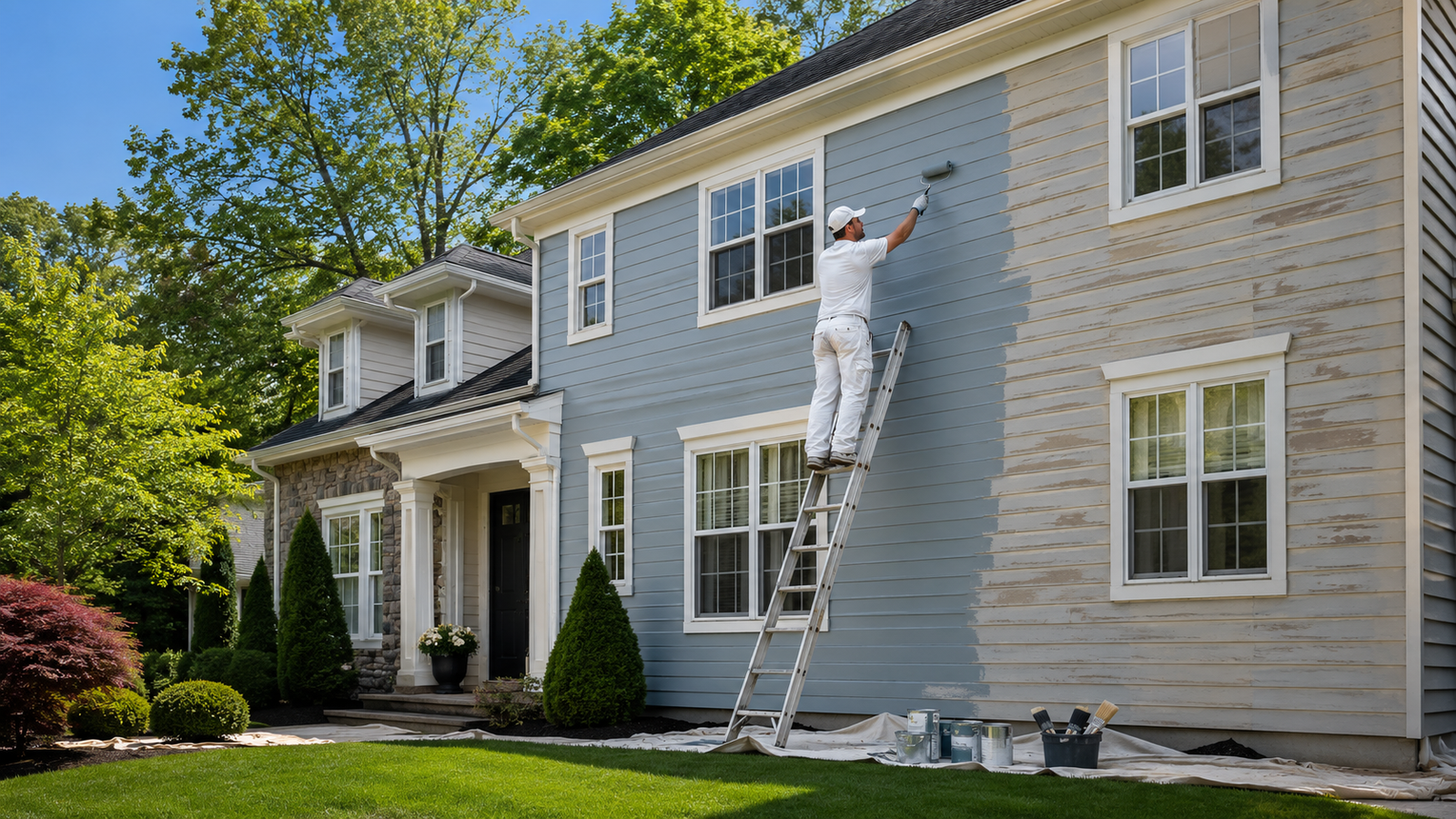
Ask a Georgia painter when to paint a house exterior and you’ll get a surprisingly specific answer — because our climate doesn’t leave much room for guessing. Paint applied in the wrong conditions here doesn’t just look bad. It blisters in the humidity, mildews by the next summer, and peels years before it should. Time it right and prep it right, and the same paint job lasts 7–10 years.
Here’s how the Georgia calendar actually works, and the prep steps that matter more than the paint itself.
The Two Best Windows: Spring and Fall
Mid-March through May and mid-September through November are the prime exterior painting windows in metro Atlanta and the northern suburbs.
- Daytime temperatures between 50°F and 85°F are the sweet spot. Below 50°F, paint won’t cure properly. Above 85–90°F — a normal Georgia June afternoon — paint dries before it can level out, leaving lap marks and poor adhesion.
- Fall is arguably the better of the two. September through early November brings the driest air of the year, fewer surprise rainstorms, and mild temperatures. If you’re reading this in October, you are standing in the best painting weather Georgia offers.
- Spring has one Georgia-specific catch: pollen. From late March into April, pine pollen coats every horizontal surface in yellow-green dust. Painting through peak pollen means sanding pollen out of your prep work and risking texture in the finish. Most experienced local crews either finish before the pollen peaks or schedule around it.
Why Summer and Winter Are Risky
Summer (June–August) stacks three problems: heat above the ideal range, humidity that often sits above 70%, and pop-up afternoon thunderstorms. Paint needs roughly 4–6 dry hours after application; a 3 p.m. storm can ruin a morning’s work. Summer jobs get done — but they run on early-morning starts, weather watching, and luck.
Winter (December–February) in Georgia is a gamble. Alpharetta and Roswell regularly dip below 40°F overnight in January, and paint that freezes or gets cold before it cures can fail across the whole wall. Short winter warm spells allow small jobs and touch-ups, but a full exterior repaint is better scheduled for spring.
Prep: The Work That Decides How Long It Lasts
Homeowners shop for paint brands. Painters shop for prep time. On a typical Georgia home, prep is 60–70% of the labor, and it’s where cheap bids cut corners:
- Pressure washing. Removes pollen, mildew, red-clay splash-back, and chalking old paint. In our humidity, the wash should include a mildew treatment — painting over mildew spores means the black spots grow back through your new paint within a season or two.
- Scraping and sanding. Every loose, bubbling, or peeling area comes off and gets feather-sanded. Paint only sticks as well as what’s underneath it.
- Wood rot repair. This is the big one in Georgia. Sills, fascia, trim ends, and siding near grade rot quietly behind intact-looking paint. Painting over rot seals moisture in and accelerates it. Rotten pieces get repaired or replaced and primed before any finish coat. If a quote doesn’t mention inspecting for rot, ask why.
- Caulking and sealing. Failed caulk around windows, doors, and trim joints is how water gets behind siding. All of it gets cut out and replaced — cheap insurance compared to siding replacement.
- Priming bare spots. Any bare wood or repaired area gets a quality exterior primer. Skipping primer on bare wood is why some paint jobs peel in sheets at year two.
What Your Siding Type Changes
- HardiePlank / fiber cement (very common in Alpharetta and Johns Creek subdivisions): holds paint the longest — often 10–15 years — but still needs the caulk joints checked, since joint failure is its weak point.
- Wood and cedar: the most prep-hungry. Expect a 5–8 year repaint cycle in Georgia’s humidity, and rot inspection is non-negotiable.
- Brick: unpainted brick is nearly maintenance-free; once brick has been painted, you’re on a repaint cycle forever. Painted brick also needs a breathable masonry coating — the wrong product traps moisture and pops off.
- Stucco: needs elastomeric or high-build coatings to bridge its hairline cracks, and every crack wider than a hairline should be addressed before coating.
What It Costs Around Atlanta’s Suburbs
For a typical 2,000 sq ft suburban home, professional exterior painting in the Atlanta suburbs generally runs $3,500–$7,500 in 2026, depending on stories, siding type, prep condition, and how much trim and rot repair is involved. Two-story homes and heavy prep push toward the top; a ranch in good shape lands near the bottom. A quote that comes in dramatically under that range usually means the prep list above got shorter.
A Quick Word on HOA Approvals
Many Alpharetta, Johns Creek, and Milton neighborhoods require Architectural Review Committee approval before you change an exterior color — and some require approval even to repaint the same color. Approval typically takes 2–4 weeks and usually needs paint brand, color names, and where each color goes (body, trim, door, shutters). Build that lead time into a fall schedule: submit in September and you’re painting in the best weather of the year instead of racing the first cold snap in November.
The October Takeaway
If your siding is chalking when you rub a hand across it, caulk is cracked around the windows, or you’re seeing the first blisters on the sunny side of the house, fall is your moment: dry air, mild temperatures, and enough season left for a full cure before winter. Book the estimate now, get the prep done right, and you won’t think about your exterior again for the better part of a decade.
Just Fix Today handles exterior painting across Alpharetta, Roswell, Johns Creek, Milton, and the surrounding suburbs — including the pressure washing, rot repair, and caulking that make the paint last — with same-day estimates.
Related services: Painters in Alpharetta · Pressure Washing in Alpharetta · Siding Repair in Alpharetta