
Dryer Vent Cleaning Cost in Atlanta: The $150 Fire-Safety Job
Here’s a home maintenance job almost nobody thinks about until something goes wrong: cleaning the dryer vent. It doesn’t make noise, it doesn’t leak, and it’s hidden behind or under your dryer — which is exactly why lint quietly builds up in there for years. And lint, as it turns out, is extremely flammable.
Thousands of dryer fires are reported across the U.S. every year, and clogged vents are behind most of them. In Suwanee, where many newer homes have the laundry room on the second floor, the vent runs are longer — and longer runs mean more places for lint to collect. Here’s what every Georgia homeowner should know.
Why Dryer Vents Are a Fire Risk
Your dryer pushes hot, moist air — and a surprising amount of lint — out through the vent duct every cycle. The lint trap catches most of it, but plenty gets past. Over time it coats the inside of the duct, and the buildup gets worse with:
- Long vent runs — second-floor laundry rooms venting through the attic to the roof are the worst offenders. Every bend and every extra foot is another place lint settles.
- Flexible foil or plastic transition ducts — the crinkly hose behind your dryer catches far more lint than smooth metal duct, and it can get crushed when the dryer is pushed back against the wall.
- Roof vent terminations — common in newer Georgia builds, these are harder for lint to escape from and harder for homeowners to inspect.
A partially blocked vent makes the dryer run hotter and longer to do the same job. Hotter, longer cycles plus a duct lined with flammable lint is the combination that starts fires.
Warning Signs Your Vent Is Clogged
You don’t need to take anything apart to spot a problem. Watch for these:
- Clothes take two or more cycles to dry
- The dryer or your clothes are unusually hot at the end of a cycle
- A burning smell when the dryer runs
- The exterior vent flap barely opens — or doesn’t open at all — while the dryer is running
- Lint collecting behind or under the dryer
- The laundry room feels humid after a load
If you’re seeing two or three of these, your vent is overdue. If you’re smelling burning, stop using the dryer and get it cleaned before running another load.
What’s Included in a Professional Cleaning (and What It Costs)
In the Atlanta area, a professional dryer vent cleaning typically costs $125–$200. Here’s what a proper job includes:
- The dryer is pulled out and the transition duct is inspected (and replaced if it’s the crush-prone foil type)
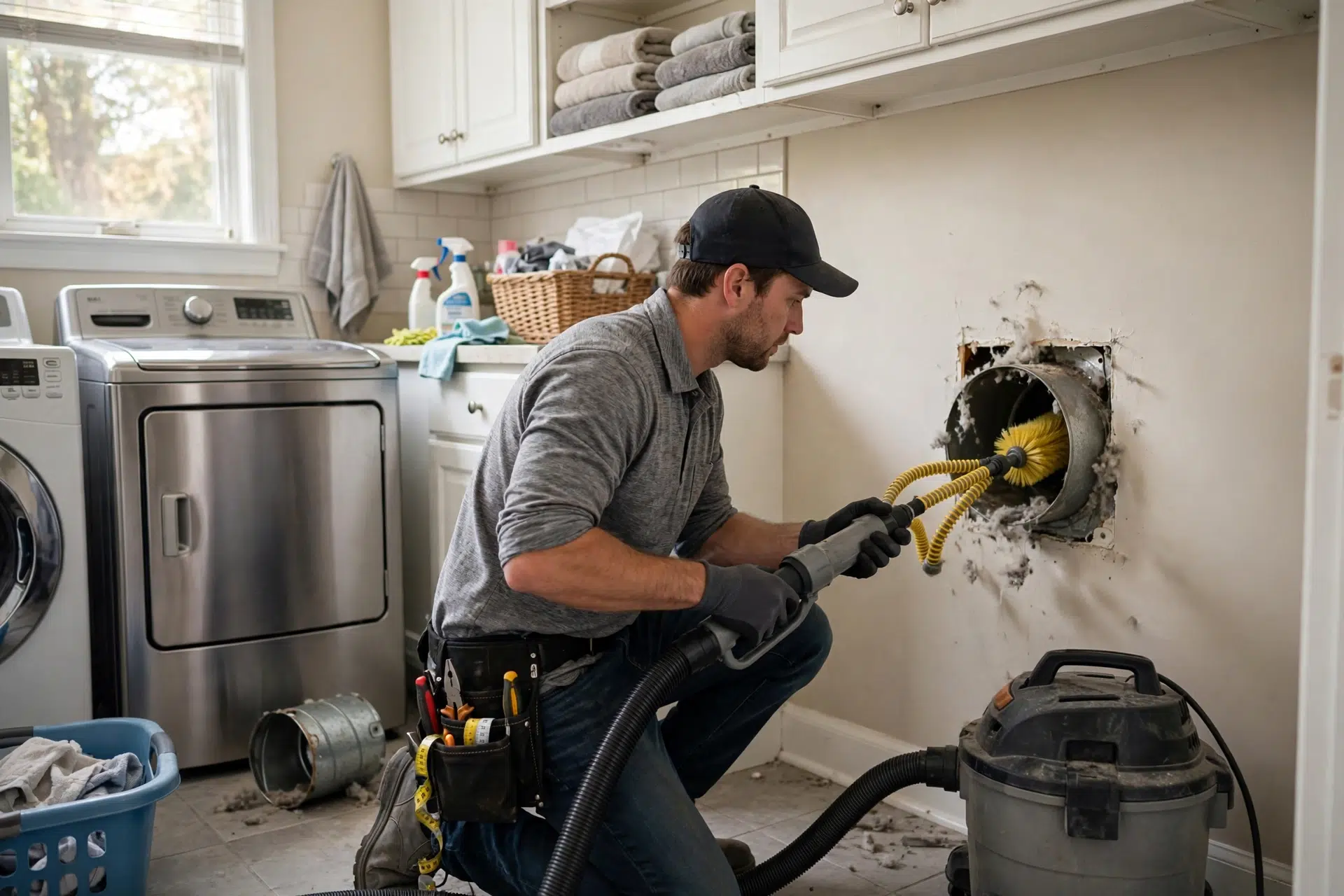
- A rotary brush system scrubs the full length of the duct from the laundry room to the exterior termination
- A high-powered vacuum pulls all the loosened lint out — not just pushed further down the line
- The exterior vent cap is cleaned and checked for proper operation
- Lint is cleared from behind and under the dryer itself
The whole thing takes 45–60 minutes. And here’s the practical part: it’s an easy add-on to any other handyman visit. If someone’s already at your house mounting TVs, patching drywall, or doing a punch list, adding a vent cleaning to the same trip saves you the minimum visit charge.
How Often Should Georgia Homes Clean the Vent?
Once a year is the standard recommendation, and it’s the right cadence for most households. Clean it more often — every 6–9 months — if you have a large family doing daily loads, pets that shed, or a long vent run through the attic to the roof.
Beyond fire prevention, there’s a money angle too: a clean vent means shorter dry cycles, which means lower electric bills and a dryer that doesn’t burn itself out years early. Replacing a dryer costs $800–$1,500. A $150 cleaning that extends its life pays for itself several times over.
Frequently Asked Questions
How much does dryer vent cleaning cost in Atlanta?
Most pros charge $125–$200 for a standard residential cleaning. Roof-terminated vents or severely clogged systems can run a bit higher. It’s almost always cheaper as an add-on to another scheduled visit.
How long does a dryer vent cleaning take?
About 45–60 minutes for a typical home. Longer vent runs or heavy buildup can add some time.
Can’t I just clean it myself with a kit from the hardware store?
The brush kits help for short, straight runs, but they can’t match a pro’s rotary system and vacuum — and most homeowners can’t safely reach a roof termination or inspect the full duct for damage. DIY kits also tend to pack lint tighter in long runs instead of removing it.
How do I know if my vent is actually clogged?
The clothes test is the simplest: if a normal load takes two cycles to dry, airflow is restricted. Check the exterior vent flap while the dryer runs — weak airflow there confirms it.
Does a clean vent really save energy?
Yes. A clogged vent can double dry times, and dryers are among the biggest energy users in the home. Shorter cycles mean lower bills starting with the very next load.
My vent runs through the attic to the roof — is that a problem?
It’s the most common setup in newer Georgia homes and it’s fine if it’s cleaned regularly and the duct is smooth metal, not flexible foil. These runs collect the most lint, so don’t skip the annual cleaning.
Can you replace a crushed or damaged transition duct?
Yes — swapping the flimsy foil hose behind the dryer for a proper semi-rigid metal duct is a quick job and one of the best small upgrades you can make. Most handymen do it as part of the cleaning visit.
Get a Free Same-Day Estimate
When’s the last time your dryer vent was cleaned? If you can’t remember, it’s overdue. Just Fix Today does dryer vent cleanings across Suwanee, Duluth, Johns Creek, and the surrounding northeast Atlanta suburbs — on its own or bundled with your other household to-dos in a single visit. Call or text (678) 549-8083 for a free same-day estimate.