
Wood Rot Repair in Atlanta: Costs, Warning Signs & Why You Can’t Just Paint Over It
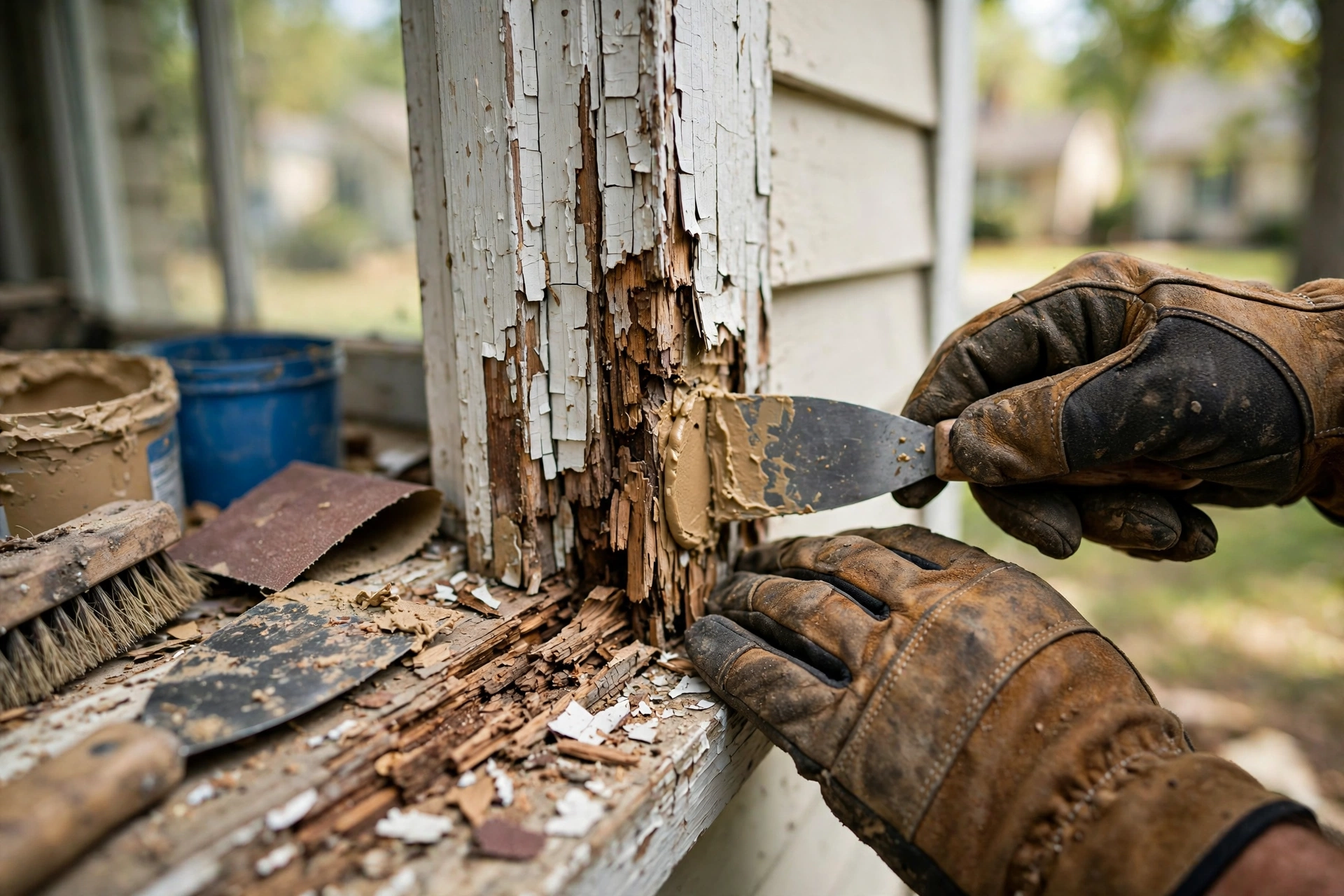
Georgia gives wood two choices: rot slowly or rot quickly. Between our summer humidity, thunderstorm deluges, and winter wet spells, water finds every gap in your home’s exterior — and once it gets into the wood, the clock starts ticking.
If you live in Roswell, Sandy Springs, or any older metro-Atlanta neighborhood, you’ve probably got rot somewhere right now: fascia boards behind the gutters, window trim that feels soft at the bottom corners, or the door frame that drinks paint every two years. Here’s how to catch it, what it costs to fix, and the one mistake that makes it worse.
The warning signs: find rot before it spreads
Walk your home’s exterior twice a year — spring and fall — and check these spots:
- Fascia and soffits behind gutters (the #1 spot in Atlanta; overflowing pine-needle gutters soak fascia for months)
- Window and door trim, especially the bottom 2–3 inches
- Deck ledger boards and railing posts where they meet concrete
- Porch columns and stair stringers
- Barge boards at the roof gable ends
Now do the screwdriver test: press a flathead screwdriver into suspicious wood. Solid wood resists. Rotted wood gives way like a wet sponge — if the screwdriver sinks in easily, you’ve got rot. Paint that’s bubbling, peeling, or flaking in sheets is often a symptom: water got behind it, and the paint film trapped the moisture in.
Why you can’t just paint over it
This is the mistake I see most often in Roswell and Sandy Springs homes. A fresh coat of paint makes rotted trim look fine for about a season. Then the paint film fails — because paint is a moisture barrier, and once water is inside the wood, that barrier keeps it there. The rot accelerates underneath.
Worse, rot spreads. Fungus doesn’t respect property lines between “this piece” and “that piece” — it marches along the grain, into rafter tails, wall sheathing, and framing. A $300 trim repair today becomes a multi-thousand structural repair in two years. If your trim has been painted over more than once and still looks bad, stop painting and start fixing.
What wood rot repair actually involves
A proper repair is more than swapping a board:
- Cut back to healthy wood. We remove the rotted section plus a margin of sound wood, because the fungal damage always extends further than it looks.
- Check what’s behind it. Rotted trim often means a failed seal, a leaking gutter, or flashing that never existed. Fix the water source or the rot comes back.
- Replace with the right material. For most Atlanta homes we use either primed, sealed exterior-grade lumber — or PVC trim, which costs more up front but simply cannot rot. On a shaded, wet north-facing wall in a pine-canopy lot, PVC pays for itself in a single skipped repaint cycle.
- Prime, seal, and paint properly. Every cut end gets primed. Caulk goes where water runs, not where it looks pretty. The paint system only works if the wood underneath is dry and sealed.
What it costs in Atlanta in 2026
Real numbers for metro-Atlanta wood rot repair in 2026:
- Small trim areas (a window frame, a section of fascia): $293–$338 per area, all-in with paint
- Linear trim replacement: roughly $5–$15 per linear foot depending on trim profile and material
- Deck board or railing section: $100–$300
- Fascia runs behind gutters: $250–$600+ depending on length and whether the gutters need re-securing
The price driver isn’t the wood — it’s the diagnosis. A handyman who fixes the flashing, the gutter slope, or the caulk gap that caused the rot saves you the next repair. That’s also why this work belongs with a repair-first handyman rather than a painter: painters paint over it. We fix why it happened.
PVC vs. primed wood: the honest comparison
Primed wood matches your existing trim perfectly, costs less, and with proper priming and painting lasts 10–15 years in Georgia. PVC trim costs more, never rots, never needs priming on cut ends, but expands and contracts with heat — it has to be installed with the right fasteners and gaps, or it warps. For ground-contact areas, north walls, and anywhere gutters overflow, PVC wins. For prominent decorative trim you want to match exactly, primed wood is usually the call.
When rot means a bigger problem
Call for a full evaluation if you see: rot that reaches rafter tails (the visible roof-beam ends), soft spots on wall sheathing under siding, sagging along an exterior wall, or a persistent musty smell in an exterior wall. Those suggest structural or moisture damage beyond cosmetic trim — we’ll tell you straight whether it’s in our scope or needs a framing or roofing contractor. No upsell theater; an honest triage is half the job.
FAQs
Q: How much does wood rot repair cost in Atlanta?
A: $293–$338 per repaired area is typical in metro Atlanta for trim and fascia work including paint; linear trim runs about $5–$15 per foot. Larger structural areas cost more and need an in-person look.
Q: Can I just paint over rotted wood?
A: No — paint seals moisture in, which accelerates the rot underneath. The repair will fail within a season or two, and the rot spreads into healthy wood while hidden. Cut it out, fix the water source, then paint.
Q: How do I know if my wood trim is rotted?
A: Do the screwdriver test: press a flathead into the wood. If it sinks in like a sponge, it’s rotted. Bubbling, peeling, or cracking paint at trim bottoms is the usual visual clue.
Q: What’s better for Atlanta homes: PVC or wood trim?
A: PVC can’t rot and is ideal for wet, shaded, or ground-contact areas. Primed wood matches existing profiles better and costs less. Many homes get both — PVC where it stays wet, wood where it shows.
Q: How long does wood rot repair take?
A: Most single-area repairs are a half-day job including paint. Full fascia runs or multiple windows take a day or more. Drying time matters: we don’t paint over damp wood.
Q: Does homeowners insurance cover wood rot?
A: Almost never — insurers classify rot as gradual deterioration, not sudden damage. (They’ll cover the burst pipe that caused the rot, but not the rot itself.) Don’t wait on a claim; get it fixed.
Q: Why is wood rot so common in Roswell and Sandy Springs?
A: Older housing stock, big shade trees, pine-needle gutters that overflow onto fascia, and Georgia humidity. Homes built before the 2000s are prime candidates — walk your exterior twice a year.
Q: Can a handyman fix wood rot, or do I need a contractor?
A: For trim, fascia, soffits, and deck components, a handyman is exactly the right call. If rot has reached rafter tails, wall sheathing, or framing, we’ll tell you — and we still handle the cosmetic restoration after the structural fix.
Stop painting over the problem
Soft trim? Peeling paint that keeps coming back? That’s rot, and it’s spreading while you read this. Call (678) 549-8083 — Just Fix Today repairs rotted trim, fascia, and wood siding across Roswell, Sandy Springs, Alpharetta, and the Atlanta metro, fixes the water source that caused it, and paints it so it stays fixed. Free written estimates.
Related services: carpentry services , painting services